Reedbeds vs. Fens: How to Tell These UK Wetland Habitats Apart
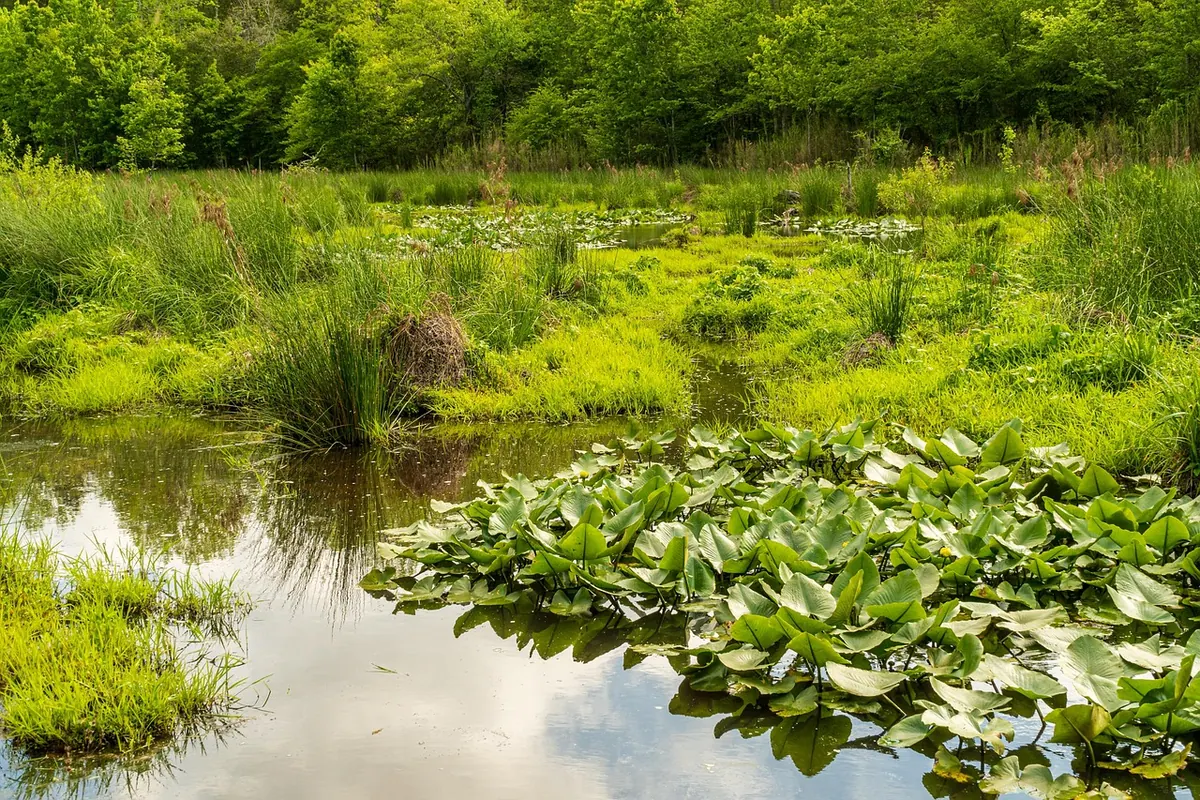
From a farm gate, a reedbed and a fen can look much the same: a soggy expanse of green, water hidden under the stems, and the smell of mud. Stand inside each one and the difference becomes obvious, once you know what you are looking at. Plants are only half the story. Water chemistry, hydrology and the soil beneath your boots do most of the sorting.
The quick version
- Water source. Reedbeds generally sit in standing water: flooded gravel pits, river margins, dykes, shallow lochs. Fens are fed by water that has moved through the ground, arriving as springs, seepages and flushes.
- Chemistry. Fens are minerotrophic, enriched by contact with rock and soil, usually with plenty of calcium. Reedbeds are often nutrient-rich, sometimes brackish, and tolerate far wider swings in water level and quality.
- Soil. Fens build deep peat full of plant remains. Reedbeds sit on silt, clay or a shallow skim of reed peat.
- Structure. A reedbed is tall, vertical and usually close to a single species. A fen has tussocks, sedge lawns, mosses and a low, mixed sward.
- Age. Fens take centuries or millennia to form. Many reedbeds are decades old, having grown in behind a dam, along a canal or in a worked-out pit.
Follow the water
Fens form where groundwater reaches the surface and keeps moving. That might be a calcareous spring at the foot of a chalk slope, an upwelling in a valley floor, or a slow seep across a hillside. Because the water has travelled through rock and soil, it arrives carrying dissolved minerals, calcium and bicarbonate most famously, and it keeps the peat wet all year. Rich fens, the ones with orchids and brown mosses, are neutral or alkaline, roughly pH 6.5 to 8. Poor fens sit at the acidic end, over sandstones and gravels, and shade into bog vegetation. Both are fed from the ground, not just from rain.
Reedbeds are far less fussy. Common reed will grow in eutrophic ditches, brackish grazing marsh, lakesides and flooded gravel pits. The water is usually still or very slow-moving, and often nutrient-rich. Levels can drop in summer and flood in winter without killing the reeds, provided the rhizomes stay damp below the surface. Many reedbeds are young, measured in decades: they appear in worked-out pits, behind dams, along canals and in abandoned wet fields.
What is underfoot
Fen peat is dark, springy and full of recognisable fragments: sedge stems, leaf traces, seeds. Squeeze a handful and it releases dark water but holds together. In calcareous fens you may find white marl or freshwater shells mixed through it. Depth tells its own story, because some fen peats run several metres down, laid at a few millimetres a year over thousands of years.
Reedbed ground is sloppier and less structured: black, silty, low in oxygen, and it smells faintly of sulphur when you disturb it. There is little you can identify in it. Older reedbeds may carry a thin layer of reed peat at the surface, but mostly you are standing on mineral sediment and rotted stems.
One warning. If the ground is a spongy mat of pale Sphagnum, the water is acidic, and cottongrass is nodding over it, you are on bog rather than fen. Bogs are rain-fed and nutrient-poor, and their peat is made almost entirely of moss. Fen peat is richer, darker and built from a much wider menu.
Plants that give the game away
Reedbed clues
Common reed dominates: two to three metres of stiff, vertical stems, blue-green in summer and straw-coloured in winter, with a deep litter layer beneath. Other plants are sparse, perhaps reedmace, great willowherb, purple loosestrife or gypsywort, and the margins usually carry willow and alder scrub. In winter a reedbed reads as a pale monoculture, which is often the easiest time to pick one out from a distance.
Fen clues
Look down, not up. Fens are low and mixed: tussocks of greater tussock sedge, saw sedge, black bog rush, blunt-flowered rush, brown mosses, marsh helleborine, grass-of-Parnassus, bogbean, marsh pea and devil's-bit scabious. In summer the colour is scattered through the sward rather than massed above your head. Acidic fens swap orchids for purple moor-grass, cross-leaved heath and Sphagnum.
Flagship species to listen and look for
In a reedbed, listen first. The boom of a bittern in late winter and early spring carries further than you would expect, reed warblers churr from the stems, water rails squeal, bearded reedlings ping from the tops, and marsh harriers sky-dance overhead in spring. Reedbeds are often cut on rotation to keep them open and to hold back scrub.
Base-rich fens carry a different set of rarities: the swallowtail butterfly in the Broads, fen orchid, fen raft spider, Norfolk hawker dragonfly, and invertebrate communities that live in the wet litter. If the site has a boardwalk and a permit-only zone, that is usually a sign you are on one of these rich fens.
When the two overlap
Reed and fen are not exclusive. Reed often grows within fen, and tall-herb fens can look reed-dominated from a distance. Fens also succeed into reedbed and then into carr woodland if left unmanaged. When the habitats blur, go back to the fundamentals. Is the water moving and mineral-rich, or still and nutrient-laden? Is there deep peat underneath? Those two answers separate the habitats far more reliably than whichever plant happens to be tallest.
Ten minutes in the field
- Trace the water. Look uphill for springs, seepages, iron staining and flushes. Water arriving from the ground points to fen.
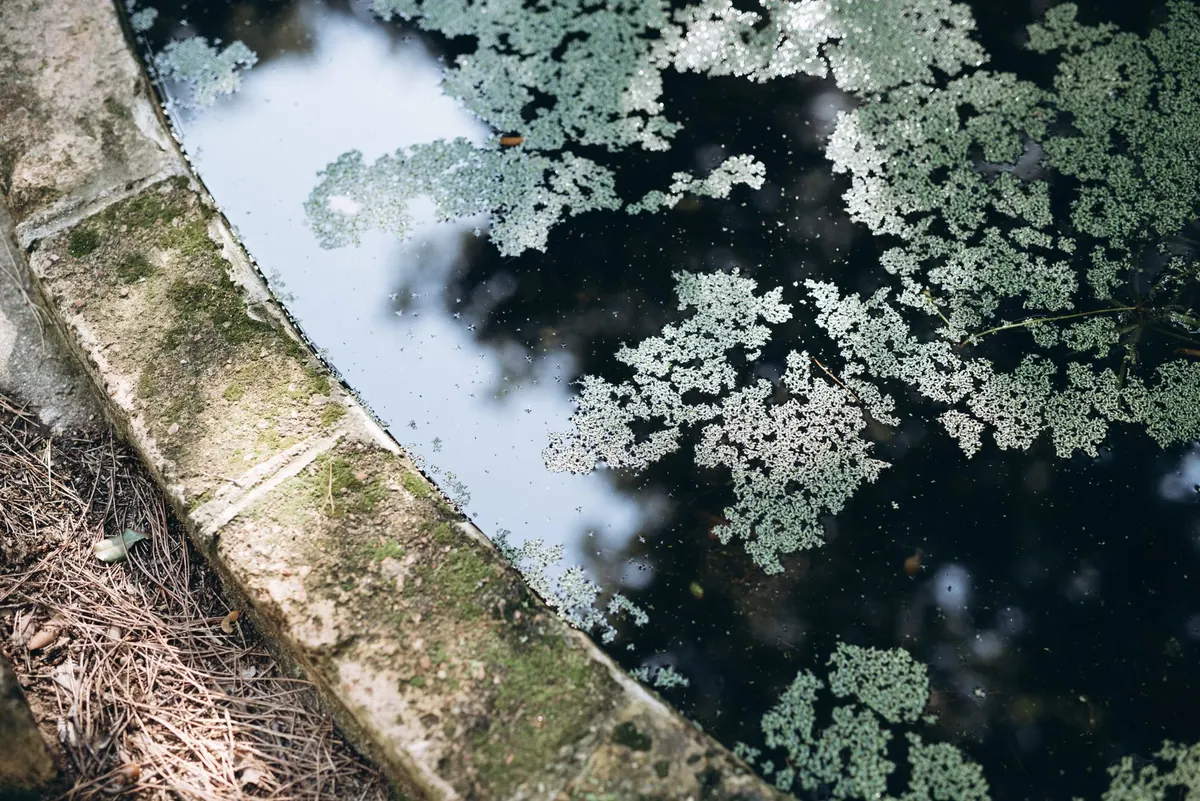
- Check the surface. Standing water with duckweed and no obvious inflow points to reedbed.
- Feel the ground. Structured dark peat and shells mean fen; black ooze and sulphur mean reedbed.
- Test pH if you carry papers. Neutral to alkaline suggests a rich fen; very acidic suggests bog or poor fen.
- Scan height and mix. Above head height, one species, straw in winter: reedbed. Knee-high, tussocky, multi-coloured: fen.
- Get down with a hand lens. Mosses and sedges tell you more than the showy flowers do.
- Write it up: date, grid reference, the three commonest plants, and whether the site is grazed, cut or abandoned. Return in another season, because one visit is rarely enough.
Fens are fragile and slow to recover. Many are protected as SSSIs, and some have no public access at all, so stay on boardwalks and mown paths, keep dogs out of wet vegetation, and never dig or collect plants. Reedbeds take more foot traffic, but the same courtesy applies: look, note, and leave the habitat as you found it.